
Unlocking Sustainability: Leveraging Secondary Raw Materials for Future Manufacturing Success
21st Century Supply Chain Planning: Empowering Manufacturers - David Mattersdorfer - Secondary Raw Materials


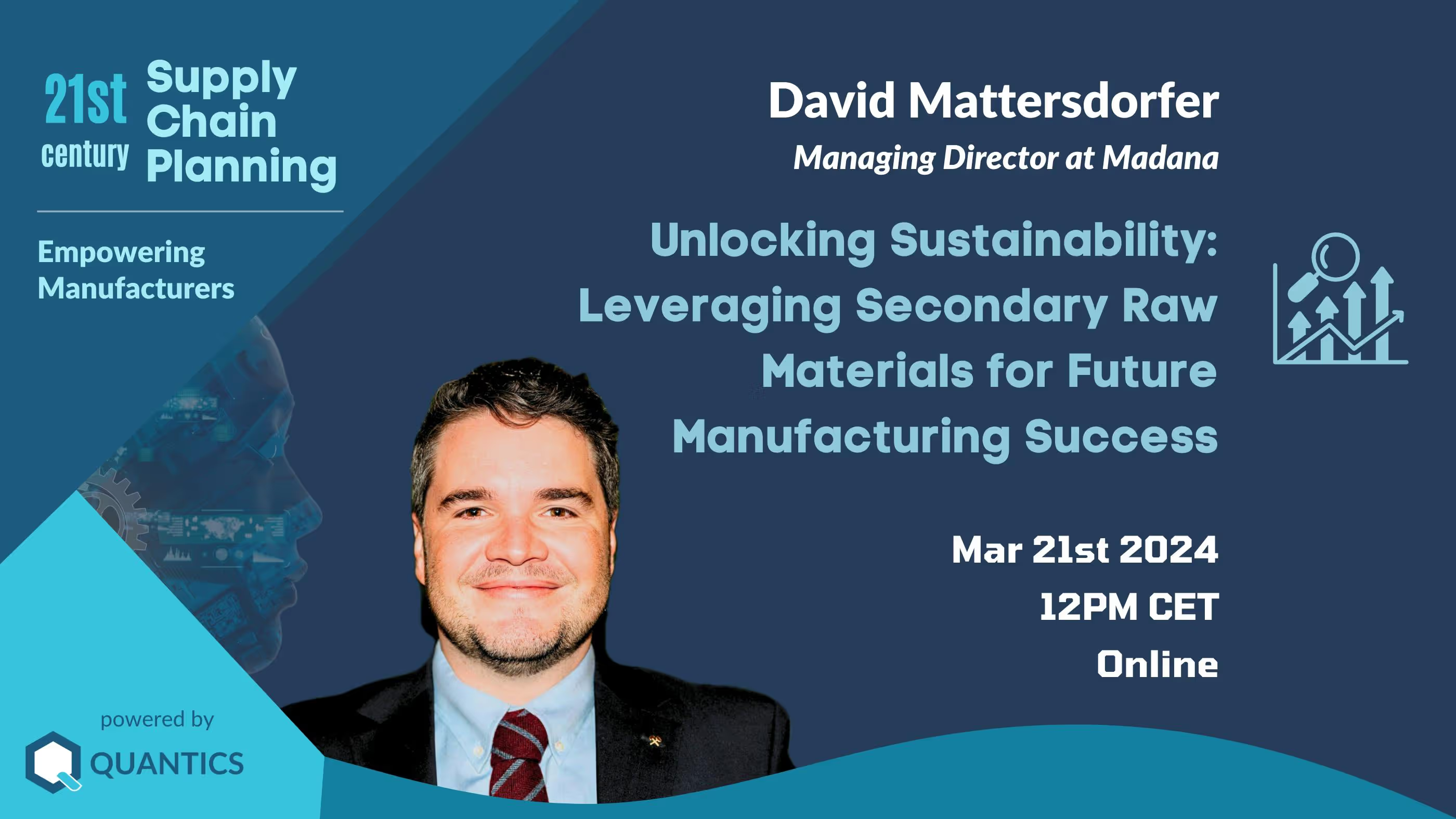
The following is an excerpt from Quantics' webinar series "21st Century Supply Chain Planning: Empowering Manufacturers”. In this episode, we explore supply chain planning, raw materials, sustainability in manufacturing, and strategies for improving business models shared by industry expert David Mattersdorfer, the Founder and Managing Director of Madana.
Remember, this is just a sneak peek! In the full episode, located on Quantics’ YouTube channel, we continue into additional topics listed at the end of this article.
Embracing Sustainability: Challenges and Opportunities
In the realm of manufacturing, the concept of sustainability is no longer a mere buzzword but a crucial aspect that businesses are increasingly compelled to embrace. As we stand at the nexus of environmental consciousness and industrial progress, the need to minimize our environmental footprint has never been more pressing. To delve into the intricacies of sustainable manufacturing and the utilization of secondary raw materials, we turn to expert guest David Mattersdorfer, whose insights shed light on the challenges and opportunities in this evolving landscape.
The Urgency of Sustainable Practices: Navigating Regulations and Strategic Advantage
The backdrop of our discussion is the staggering reality that approximately 20 billion tons of material go to waste annually, with a significant portion left unrecycled or underutilized. Manufacturing, being a major contributor to this waste stream, holds immense potential to drive positive change. David underscores the urgency of adopting sustainable practices, citing the impending impact of regulations like the Sustainable Supply Chain Act. Early adoption, he emphasizes, can confer a strategic advantage for companies navigating the transition towards sustainability.
The Role of Secondary Raw Materials: Innovations in Plastic Recycling
When examining the role of secondary raw materials in manufacturing, David's expertise in polymers shines through. While industries like steel and glass recycling have made strides, the plastic industry stands out for its proactive approach. Plastic recycling, despite its inherent complexities, has garnered significant attention due to mounting environmental concerns. The versatility of plastics necessitates a nuanced approach to recycling, categorized into theoretical, technical, and practical realms. However, the political and social scrutiny surrounding plastic waste has propelled the industry to innovate and integrate recycled materials into production processes.
Navigating Challenges in Adopting Secondary Raw Materials
Navigating the terrain of secondary raw materials presents multifaceted challenges for manufacturers. Beyond regulatory hurdles, the shift from a linear to a circular economy necessitates a fundamental rethinking of traditional manufacturing paradigms. The uniformity and consistency inherent in primary raw materials give way to the variability of recycled inputs, demanding agile production processes. Moreover, customer expectations for standardized products further complicate the integration of recycled materials into manufacturing workflows.
David underscores the urgency of adopting sustainable practices, citing the impending impact of regulations like the Sustainable Supply Chain Act. Early adoption, he emphasizes, can confer a strategic advantage for companies navigating the transition towards sustainability.
Balancing Demand-side Imperatives and Production Complexities
David elucidates the dichotomy between demand-side imperatives and production complexities, particularly in industries with stringent quality and safety standards. While the allure of sustainability may enhance a company's brand image, practical considerations such as material compatibility and product integrity pose tangible challenges. Industries like healthcare, where safety is paramount, face unique hurdles in incorporating recycled materials without compromising patient well-being.
Holistic Approaches for Unlocking Potential
As our conversation with David underscores, unlocking the full potential of secondary raw materials requires a holistic approach encompassing technological innovation, regulatory alignment, and consumer education. While the path ahead may be fraught with challenges, the rewards of sustainable manufacturing—both environmental and economic—are too significant to ignore. By embracing the principles of circularity and resource efficiency, manufacturers can not only mitigate their environmental impact but also pave the way for a more resilient and prosperous future. By leveraging secondary raw materials as catalysts for innovation and change, businesses can chart a course towards long-term success while safeguarding the planet for generations to come.
Want to learn more about this topic?
This is just a sneak peek into "Unlocking Sustainability: Leveraging Secondary Raw Materials for Future Manufacturing Success” with David Mattersdorfer, the Managing Director of Madana, on March 21st, 2024.
To watch the full episode, visit Quantics’ YouTube channel. In the full episode we continue into the following additional topics:
- Cost savings from integrating secondary raw materials
- Adoption trends & emerging technologies for secondary raw materials
- Evaluating the environmental impact & how companies leverage this to make informed decisions
- Key players and how they collaborate
- Strategies for internal and external stakeholder engagement
- Measures for continuous improvement in secondary raw materials utilization
- Success stories: Contributions to sustainability, profitability, stakeholder feedback
Meet Our Expert: David Mattersdorfer
David Mattersdorfer is a visionary entrepreneur dedicated to advancing circular economy principles with his expertise in technical and engineering domains. With the successful merger and exit of his company, POLYMER STOCKLIST, David ventured into leading operations for the DACH region at CYRKL. Now, as the founder of MADANA, his consultancy firm offers unparalleled guidance to startups and industries navigating sustainable initiatives. David's innovative spirit and technical savvy are driving impactful change towards a greener future.

FAQ
1. What are secondary raw materials, and how are they different from primary raw materials?
Secondary raw materials are materials recovered from waste or end-of-life products and reprocessed for use in new production, like recycled plastic pellets or reclaimed metal. Primary raw materials are extracted directly from natural resources, such as crude oil or virgin ore. One important practical difference is consistency: secondary materials can vary more in composition and quality depending on their source and processing, which can require manufacturers to use more flexible production and quality-control processes.
2. Does using secondary raw materials always cost more than using virgin raw materials?
No. Secondary raw materials can sometimes be cheaper than virgin materials, but the economics depend heavily on the material, quality, availability, processing requirements, and market conditions. Recycled inputs can also create additional costs through sorting, testing, quality control, or adjustments to the production process. As recycling technologies and secondary-material markets develop, manufacturers increasingly need to evaluate the total cost of using recycled material rather than comparing raw material prices alone. For further information on the economics and development of secondary plastics markets, see the OECD's Global Plastics Outlook.
3. Can recycled plastic meet the same quality standards as new plastic?
Yes, for many applications, although not universally. High-quality recycled plastics can meet demanding technical specifications when sourcing, sorting, and processing are well controlled. The bigger challenge is often achieving consistent properties from batch to batch. Applications such as medical products and food-contact packaging can have particularly strict safety and material requirements, which can limit which recycled materials are suitable or require additional qualification and testing.
4. What is the "Sustainable Supply Chain Act" mentioned in the interview?
The term refers to Germany's Supply Chain Due Diligence Act, commonly known by its German abbreviation LkSG, which came into force in 2023. It requires companies within its scope to address certain human rights and environmental risks in their own operations and supply chains through measures such as risk management, risk assessments, preventive measures, and reporting. More broadly, sustainability and supply-chain due diligence requirements are also developing at EU level, increasing the importance of transparency and responsible sourcing for manufacturers.
5. Does switching to secondary raw materials require changing your production process?
Often, yes. Recycled inputs can be more variable than virgin materials in characteristics such as composition, purity, colour, or mechanical properties. Production processes designed around highly consistent primary raw materials may therefore need more flexible tolerances, additional quality checks, blending strategies, or adjustments to process parameters. Planning for that variability upfront, rather than treating secondary material as a simple drop-in replacement, can make the transition much more successful. This is exactly where production planning support comes in.
Start now
Start now
Discover how Quantics’ innovative features empower manufacturing companies to drive sustainable operations.
Learn how Quantics contains unique features that can optimally support your manufacturing businesses in unlocking the power of cutting-edge forecasting and supply chain planning.

Frequently Asked Questions
Find answers to common questions about our solutions and how they benefit your operations.
.png)